How Long Does Driveway Sealcoating Last?

Fresh sealcoating looks great the day it goes down, but most property owners are really asking a different question: how long does driveway sealcoating last before it stops doing its job?
That answer matters because sealcoating is not just about dark, uniform color. It is about protecting asphalt from water penetration, UV oxidation, oil drips, heavy traffic wear, and small surface defects that turn into expensive structural repairs if ignored.
For most residential driveways, sealcoating lasts about 2 to 3 years. In some cases, it can hold up a bit longer; in others, it may need attention sooner. The difference usually comes down to:

The condition of the asphalt prior to sealing
The thoroughness of surface preparation
The quality of the sealer material used
Daily vehicle traffic volume and turning weight
Local seasonal weather conditions
PROPERLY SEALED DRIVEWAY | UNSEALED / NEGLECTED |
Repels water & oil spills | Water penetrates base |
Shields against UV rays | Fast oxidation & fading |
Prevents major cracking | Freeze-thaw destruction |
Extends asphalt life by years | Requires costly repaving |
How long does driveway sealcoating
last in real conditions?

While 2 to 3 years is the industry standard, real-world conditions vary significantly.
In Fairfield and New Haven Counties, local driveways face harsh environment cycles—winter freeze-thaw patterns, heavy snow, seasonal rains, intense summer heat, and constant vehicle use. A driveway that looks solid in spring can deteriorate rapidly if cracks were left open before sealing.
Two neighboring homes in Connecticut can experience completely different results, even if sealed in the exact same week:
Factor | Home A (Longer Lifespan) | Home B (Shorter Lifespan) |
Traffic | 1–2 passenger cars | Multiple cars, delivery vans, heavy turning |
Sun/Shade | Balanced shade & sun | Extreme direct sun or constant damp shade |
Drainage | Water sheds off edges | Water pools near garage or low spots |
Surface Prep | Power-cleaned & crack-filled | Sealed over dirt, moss, or untreated cracks |
Sealcoating should be viewed as part of a ongoing preventive maintenance cycle, not a one-time fix. When applied at the right time over a properly prepared surface, it significantly slows pavement aging. Applied too late—after major structural cracking or surface failure has set in—it improves appearance temporarily but cannot reverse structural damage.
Key Factors Affecting Sealcoating Lifespan

1. Thorough Surface Preparation
Prep work is the most critical and most frequently overlooked step. If dirt, moss, loose debris, oil stains, or untreated cracks are left in place, the sealer cannot bond properly. Quality results start long before the first coat goes down.
2. Crack Filling vs. Sealing
Sealcoating is a protective surface layer, not a crack filler. If water is entering open cracks, sealing over them leaves the pavement vulnerable. During winter, trapped sub-surface water freezes, expands, and creates severe pavement upheaval.
3. Commercial-Grade Materials
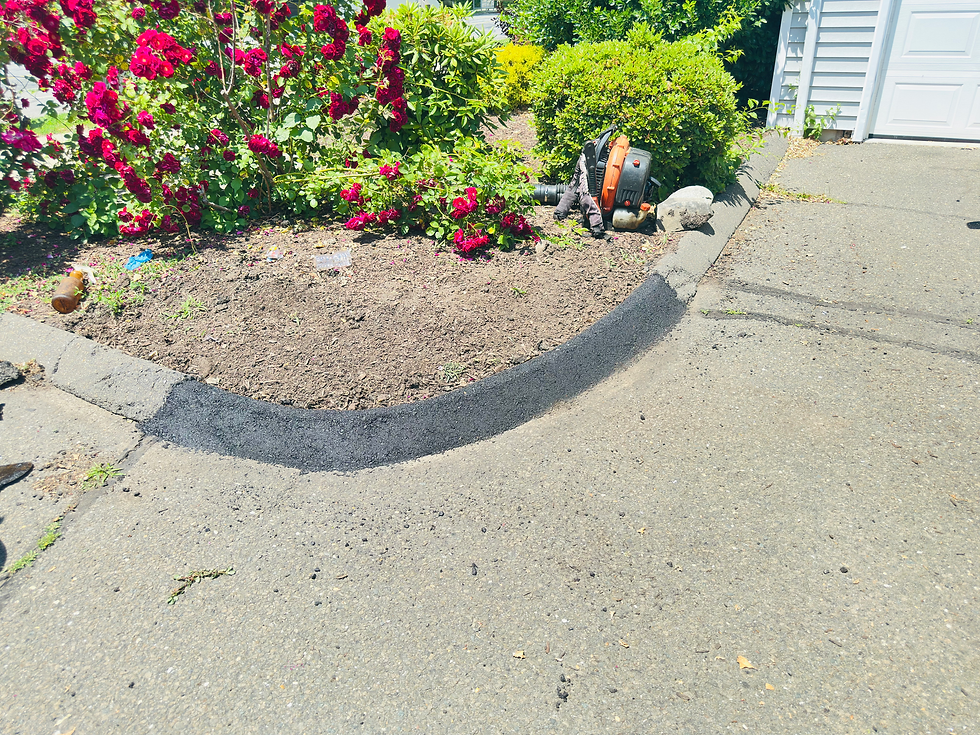
Material quality makes a major difference. High-grade commercial sealers are engineered to withstand traffic and weather better than standard retail buckets. Diluted applications or lower-grade sealers may look acceptable on day one but wear off rapidly.
4. Traffic Patterns & Weight
A driveway used by one or two light vehicles wears far better than one supporting work trucks, delivery vans, or frequent multi-car parking. Tight power-steering turns in hot weather and heavy loads accelerate surface scuffing and wear.

5. Connecticut Seasonal Weather
UV rays oxidize asphalt, causing it to turn gray and brittle. Rains and snow introduce moisture that wreaks havoc during freeze-thaw cycles. Sealcoating acts as a sacrificial barrier against these climate factors.
Signs Your Sealcoat Is Wearing Out
Most driveways don't fail overnight; sealer wears down gradually over time. Watch for these early indicators:
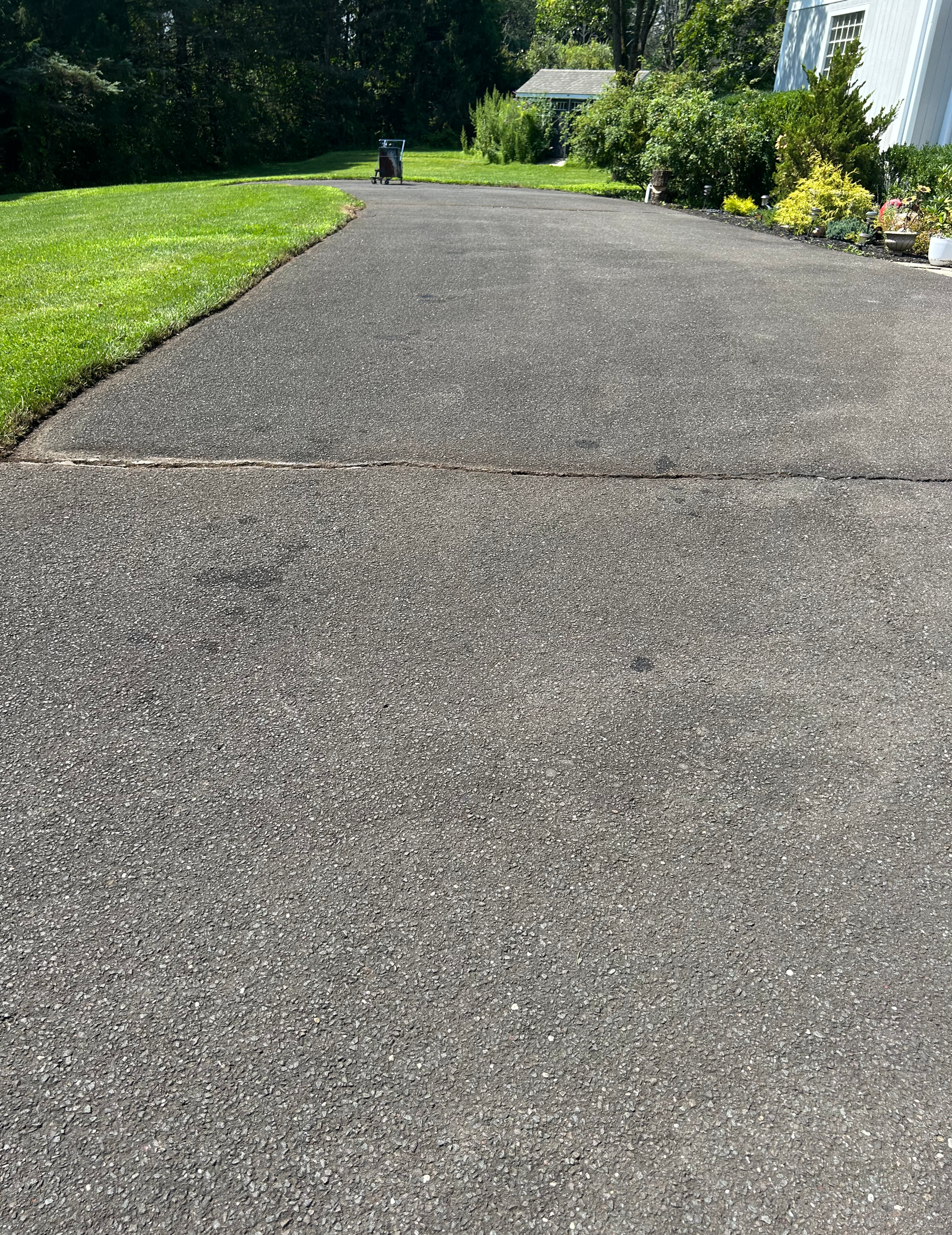
Fading Color: The deep black finish transitions to a light gray, indicating the protective top layer is thinning.
Wear Paths: High-friction zones—such as tire tracks or turning areas near the garage—show bare asphalt underneath.
Visible Fine Cracks: Hairline cracks begin to stand out as sealer coverage erodes.
Loss of Water Beading: Rain no longer beads up on the surface and starts soaking directly into the top layer.
Note: Catching these signs early keeps maintenance simple. Waiting too long allows moisture into the sub-base, requiring hot-mix asphalt patching rather than standard sealcoating.
How Proper Prep Extends Sealcoating Life
A sealcoating job is only as good as the preparation beneath it:

Deep Cleaning: Removing dirt, algae, and grit so the coating binds directly to the asphalt.
Oil Spot Priming: Treating petroleum stains so they don't bleed through or compromise adhesion.
Hot/Cold Rubberized Crack Repair: Filling open cracks to stop moisture penetration.
Asphalt Patching: Repairing structural potholes or damaged sections before sealing.
At A.F. Driveway Sealing, this preparation-first approach is central to delivering long-lasting protection. While the deep black topcoat gets the attention, the prep work determines how many years that protection actually lasts.
Practical Habits to Maximize Your Driveway's Lifespan
You can easily add extra months or years to your sealcoating investment with a few simple steps:

Address Oil Drips Quickly: Clean automotive fluids immediately, as petroleum solvents break down asphalt binder.
Avoid Sharp Turning While Stationary: Turn your wheel while the vehicle is rolling slightly—especially on hot summer afternoons—to prevent tire scuffing.
Keep Drainage Clear: Ensure gutters, downspouts, and yard runoff direct water away from driveway edges.
Inspect Annually: Do a quick walk-around every spring to spot new cracks or wear areas before winter returns
Ready to Protect Your Investment?

If you aren't sure whether your driveway needs sealcoating, don't guess based on age alone. Evaluate the surface condition, look for signs of fading or water penetration, and view sealcoating as smart preventive care.
Need an expert opinion on your driveway in Fairfield or New Haven County?
Contact A.F. Driveway Sealing today to schedule your free estimate!
203-368-8784 call or text


Comments